
Shirai Research Group, Nagoya Institute of TechnologyAdvanced Ceramics Research Center / Department of Life Science and Applied Chemistry, Field of Advanced Ceramics

RESEARCH

The Shirai Research Group creates “ceramics that contribute to people’s lives.” Focusing on chemical reactions at the surfaces and interfaces of powders and ceramics, we develop processes that synthesize functional materials at low temperature, in a short time, and with low energy consumption, using the unique reaction fields generated by microwaves and mechanochemical reactions. Our targets range widely from environmental purification catalysts and luminescent materials to energy materials and construction materials, and we pursue our research under the keyword “From Tea to Space.”

Environmental purification materialsLow-Environmental-Impact ProcessesNext-Generation Materials ProcessesGreen Energy Materials

KeywordsCeramic Engineering / Materials Surface Chemistry / Ceramic Processing / Mechanochemistry / Microwave Chemistry

Related SDGs6 Clean Water and Sanitation / 7 Affordable and Clean Energy / 9 Industry, Innovation and Infrastructure / 11 Sustainable Cities and Communities / 12 Responsible Consumption and Production

▶ Lab introduction videos and radio programs are on the MEDIA page

Research Topics

Illustration of structural control of particle surfaces by microwaves
Next-Generation Materials ProcessesEnvironmental purification materials

Rapid Synthesis of Functional Materials in Microwave-Induced Unique Reaction Fields (in Japanese)

Microwaves can heat materials selectively and rapidly from the inside, creating “thermally non-equilibrium” reaction fields that conventional heating cannot achieve. Using a 2.45 GHz single-mode microwave irradiation system and microwave plasma, our laboratory has developed methods to introduce oxygen vacancies and nanocarbon coatings onto the surface of titanium oxide particles within minutes. With these methods we have created non-stoichiometric titanium oxide, tungsten oxide, and molybdenum oxide photocatalysts that work under visible and near-infrared light, and we are applying them to water purification and to hydrogen production by water splitting. We also work on structural control of metal nanoparticles, such as the rapid synthesis of platinum nanoparticles combined with the liquid-phase polyol method.

Selected papers: Sci. Rep. 9, 4900 (2019) / Scripta Mater. 177, 157 (2020) / ACS Appl. Nano Mater. 5, 4305 (2022) / ACS Appl. Mater. Interfaces (2024)

▶ Watch the video on the molybdenum oxide-based water-purification catalyst
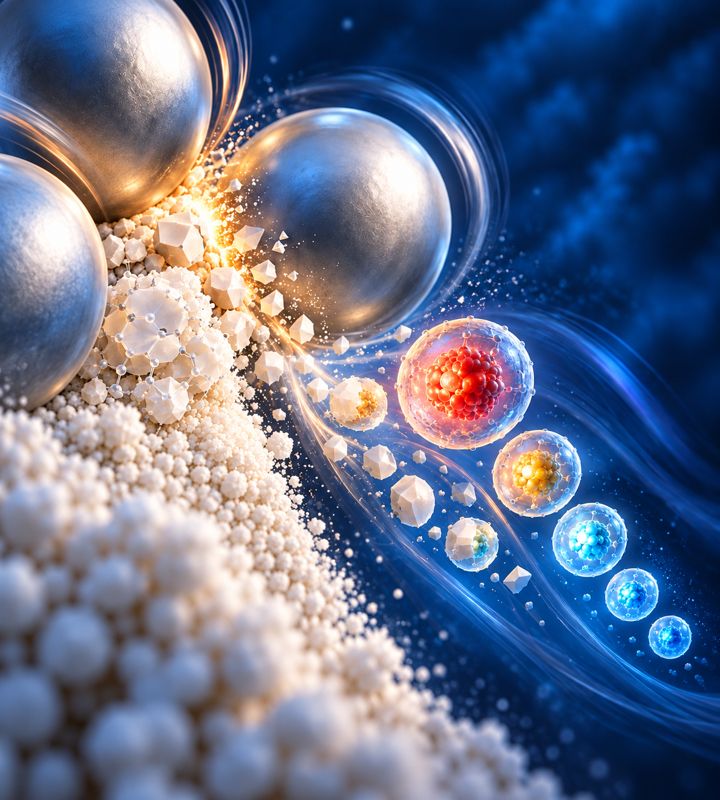
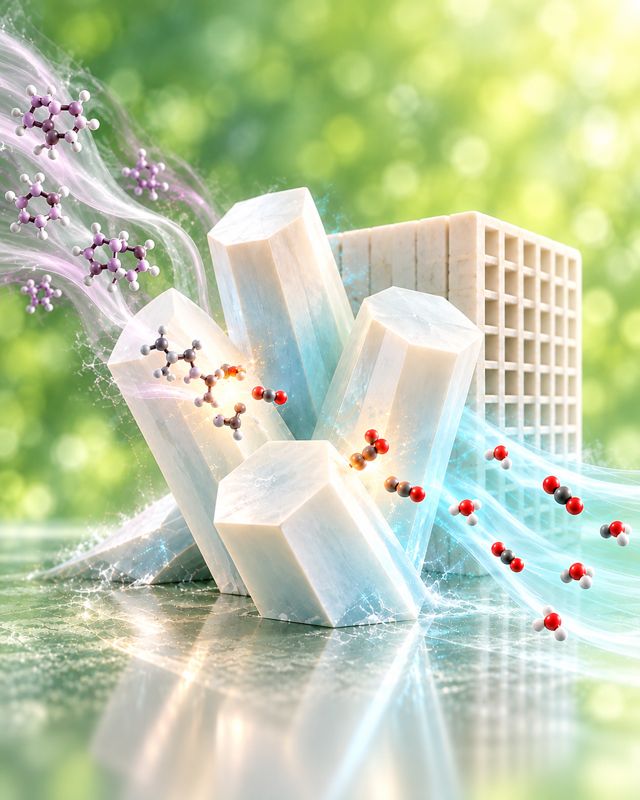
Illustration of the synthesis of luminescent silicon nanoparticles using the mechanical energy of a ball mill
Low-Environmental-Impact Processes

Surface activation and solid-state synthesis by mechanochemical reaction

Mechanical energy applied to powders by ball milling and similar methods disrupts the surface structure of the powder and provides a driving force for chemical reactions even at room temperature. Using this mechanochemical reaction, we developed a method to synthesize luminescent silicon nanoparticles (SiNPs@SiO2) from hydrogen silsesquioxane ((HSiO1.5)n). This method controls the emission color from red to blue by particle size, without high-temperature heat treatment or hazardous reagents. We are further extending this approach to energy-saving materials processes, including solid-state synthesis of hydrogen tungsten bronzes and perovskite materials, and surface activation of coal fly ash and hydroxyapatite.

Representative papers: J. Mater. Chem. C 10, 12588 (2022, Front Cover) / RSC Mechanochem. 5, 641 (2025) / Ceram. Int. 50, 20790 (2024)

Illustration of VOC decomposition with a hydroxyapatite catalyst and a honeycomb filter
Environmental purification materials

Precious-Metal-Free Environmental Catalysts Using Hydroxyapatite (in Japanese)

Volatile organic compounds (VOCs) are air pollutants that cause photochemical oxidants and PM2.5, and their decomposition has relied on expensive precious-metal catalysts such as platinum and palladium. Our laboratory discovered that hydroxyapatite (HAp), the main component of bones and teeth, can completely decompose VOCs without any supported precious metals, and was the first in the world to clarify the reaction mechanism. We have dramatically improved its catalytic performance by exposing active planes (a- and c-planes) through crystal growth control and by surface activation through mechanochemical treatment. We are also developing environmental purification filters in which HAp formed into porous bodies serves as both “support” and “catalyst,” and utilizing HAp obtained from waste bones.

Representative papers: Catal. Sci. Technol. 10, 5453 (2020) / Sci. Rep. 11, 7512 (2021) / J. Ceram. Soc. Jpn. 133, 220 (2025)

Illustration of applications of conductive ceramics in batteries, automobiles, and electromagnetic wave absorbers
Green Energy Materials

Conductive Ceramics by Gel Casting and Reduction Sintering

To make insulating ceramics such as alumina electrically conductive, we developed a method in which bodies are formed by “gelcasting”—gelling a slurry containing monomers and a crosslinker inside a mold—and the organic components are then converted into nanocarbon during sintering in a reducing atmosphere. Because the nanocarbon forms continuously along the grain boundaries, the resulting semiconductive composites show a mobility 20 times higher than those made by conventional methods. In graphite/alumina composites produced by pulsed electric current sintering, we have also succeeded in selectively obtaining p-type and n-type semiconducting behavior. The method is further applied to crystal-oriented ceramics formed in a high magnetic field and to porous thermal insulators.

Selected papers: J. Eur. Ceram. Soc. 39, 1730 (2019) / J. Adv. Ceram. 11, 523 (2021) / J. Eur. Ceram. Soc. 44, 1864 (2023)

Illustration of producing luminescent carbon nano-onions from fish scales and applying them to LEDsIllustration of cementless concrete hardened by surface activation and chemical reaction of fly ash
Low-Environmental-Impact ProcessesNext-Generation Materials Processes

Upcycling of biomass and industrial by-products

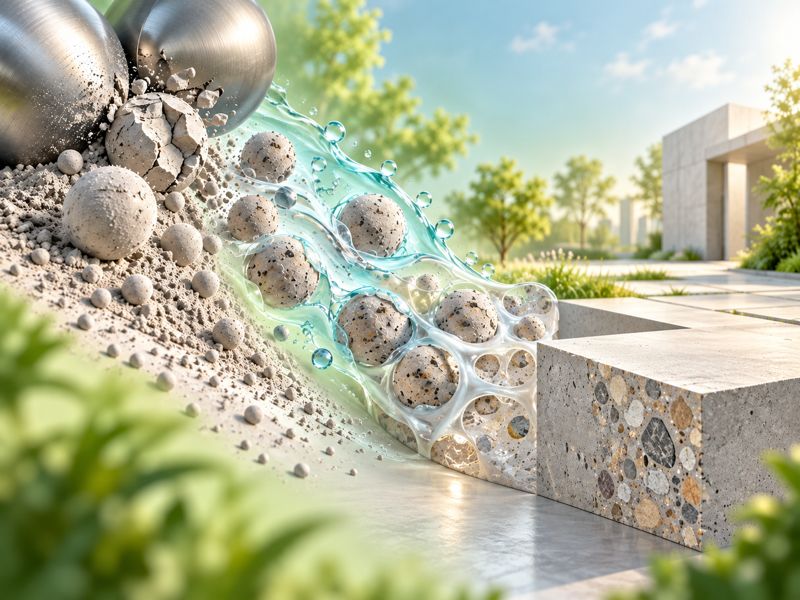
We convert biomass such as fish scales and industrial by-products such as fly ash from coal-fired power plants into high-value functional materials. Simply by pyrolyzing fish scales with microwaves for a few seconds, we succeeded in synthesizing carbon nano-onions with the world's highest luminous efficiency (quantum yield of approx. 40%), and demonstrated their application to flexible luminescent films and LEDs. We are also establishing a “cementless concrete” technology, in which the surface of fly ash is activated by mechanochemical treatment and then hardened through chemical reaction with an alkaline solution, and clarifying its strength development mechanism. In addition, we are working on SiC synthesis from rice husk ash, recycling of aluminum dross, and the development of solid catalysts that recover carbon fibers from carbon fiber reinforced plastics (CFRP).

Selected papers: Green Chem. 24, 3969 (2022, Back Cover) / Ceram. Int. 49, 34327 (2023) / Adv. Powder Technol. 36, 104910 (2025) / Green Chem. (2026)

▶ Watch the video on fish-scale carbon nano-onions
Illustration of a lunar base paved with construction materials made from microwave-sintered lunar regolith
Next-Generation Materials Processes

Space infrastructure made with microwaves

Through programs such as the Artemis program, a crewed presence of around 1,000 people on the Moon is envisioned by around 2040. Transporting materials from Earth to the Moon is said to cost about 100 million yen per kilogram, making in-situ resource utilization (ISRU) technologies, which use lunar resources on site, indispensable. Our laboratory is developing technology to produce building materials by heating “regolith,” the basaltic sand covering the lunar surface, with microwaves to melt and sinter it. By precisely designing multi-step microwave heating under vacuum, we achieved a world-class compressive strength of about 65 MPa in sintered bodies with a relative density of only about 70%. Aiming at their use as paving materials for transport routes and rocket launch and landing pads and as protective layers for habitats, we are also taking on the challenge of evaluating their behavior in low-gravity environments.

Selected paper: Sci. Rep. 14, 28231 (2024)

Illustration of green tea catechins changing on a glaze surface
Next-Generation Materials Processes

The “teacup of the future” from the surface chemistry of glazes

“The same tea tastes different depending on the teaware.” To verify this saying scientifically, we investigated how green tea catechins change on the surfaces of ceramic glazes such as Oribe, Irabo, Namako, and transparent glazes. We found, for the first time in the world, that transition metal oxides of copper, iron, cobalt, and other elements contained in the glazes act as catalysts that selectively decompose and polymerize catechins. Inside a teacup, green tea can even change into components resembling those of black tea or oolong tea. We are now controlling glaze composition and structure to study their effects on aroma compounds, aiming at new developments in traditional Japanese ceramics technology and tea culture.

Representative paper: Sci. Rep. 13, 10507 (2023)

▶ Watch the research introduction video
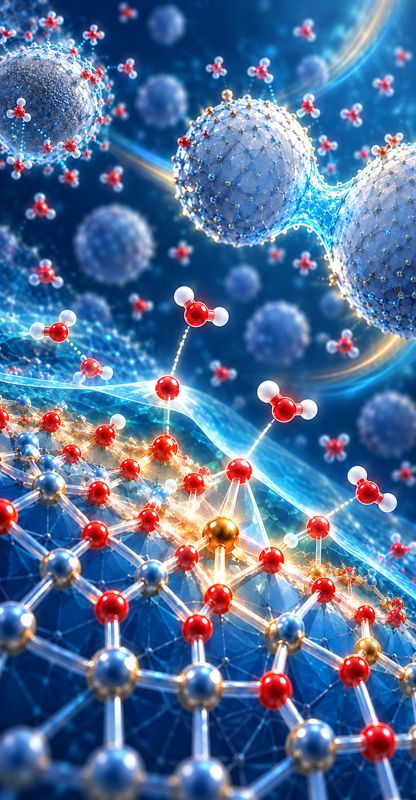
Illustration of hydration on alumina particle surfaces and bonding between particles
Next-Generation Materials ProcessesLow-Environmental-Impact Processes

Surface Characterization and Hydration Behavior of Ceramic Powders

The properties of ceramic powders are largely governed by the state of a surface layer only a few nanometers thick. Our research began with looking closely at these powder surfaces. Using temperature-programmed desorption mass spectrometry (TPD-MS) and diffuse reflectance infrared spectroscopy (DRIFT), we characterized the hydrate and adsorbate layers and the coordinatively unsaturated sites, such as tetrahedral aluminum ions, on commercial high-purity α-alumina powders, and showed that their hydration ability differs greatly depending on the powder manufacturing process. We also clarified the mechanism and kinetics of the hydrolysis and degradation of aluminum nitride (AlN) powders in moist air.

Making active use of surface hydration, we developed a binder-free forming method for alumina in which microwave irradiation promotes the hydration reaction that bonds particles together. This knowledge of powder surfaces, extended to non-fired ceramics via mechanical surface activation in a planetary ball mill and to the effect of ball milling on hydration behavior, forms the foundation of our current work on mechanochemical and microwave processing and on amorphous alumina catalysts rich in five-coordinated aluminum.

Representative papers: Sci. Technol. Adv. Mater. 6, 123 (2005) / J. Ceram. Soc. Jpn. 114, 286 (2006) / J. Ceram. Soc. Jpn. 114, 415 (2006) / J. Am. Ceram. Soc. 89, 937 (2006) / J. Am. Ceram. Soc. 90, 4026 (2007) / J. Ceram. Soc. Jpn. 120, 438 (2012) / Ceram. Int. 50, 20790 (2024)

▲